Sunday, September 27, 2015
Emilienne Moreau and the Germans
"...The Moreau house was not large, and the wounded kept coming. The rescue station was expanded to include the house next door. An enormous hole was made in one of the walls so the wounded men could be moved in and out more easily.
Shortly afterwards, Emilienne was caring for a wounded soldier in the expanded station when a bullet suddenly whizzed through a hole in the wall and just past her head. When she turned to see where the bullet had come from, she saw the silhouettes of two approaching Germans. She grabbed a revolver that had been left by one of the male nurses and fired..."
Excerpt from "Emilienne Moreau: The Teen Who Became a National Symbol" from Women Heroes of World War I: 16 Remarkable Resissters, Soldiers, Spies, and Medics.

Emilienne Moreau and the Scottish soldiers in Loos

Emilienne, who didn't speak English, frantically tried to make one of the officers understand that his men were walking towards their deaths. She offered to guide them in such a way that they would avoid the gun nests in the tower bridge and the long slag heap.
With Emilienne's help the Scottish troops moved safely around the gun nests and took them out..."
Excerpt from "Emilienne Moreau: The Teen Who Became a National Symbol" from Women Heroes of World War I: 16 Remarkable Resisters, Soldiers, Spies, and Medics.
Monday, August 25, 2014
Six Famous Medical Women of the First World War
The Great War was a conflict of horrific casualties but the death toll would have been much higher if it hadn't been for the countless dedicated medical workers who fought to save the lives of the wounded. The following six female medics gained particular fame while doing so.


Elsie Knocker and Mairi Chisholm
Imperial War Museum
Elsie Knocker and Mairi Chisholm were two motorcycle enthusiasts who, when the war began, worked as dispatch riders in London for a month before being chosen to travel to Belgium with a unit called the Flying Ambulance Corps. When they noticed that even moderately wounded Belgian men were dying of shock during the long ambulance rides to the hospital, the women decided to create a relief station close to the fighting where these men could recuperate before making the trip. Knocker and Chisholm were both personally decorated by King Albert of the Belgians for their efforts.
Read more about Knocker and Chisholm here.
Elsie Inglis
Elsie Inglis was a Scottish surgeon who offered her services to the British War Office when the war began. She was turned down with the following words: "My good lady, go home and sit still." Inglis did neither. With funds raised by the Scottish Federation of Women's Suffrage Societies, she created the Scottish Women's Hospitals for Foreign Service, mobile units staffed and run by women that were utilized in France, Serbia, Salonika, Romania, Malta, Corsica and Russia. Inglis spent much of her time in Serbia where, because of her efforts, she became a national hero.
Radiographers Helena Gleichen and Nina Hollings at work
Helena Gleichen and Nina Hollings were two British women who worked as radiographers on the Italian Front, locating pieces of shrapnel and bullets with their equipment so that surgeons could operate on wounded men more precisely. Often coming under fire, both women were decorated by the governments of Italy and Britain.
Read more about Gleichen and Hollings here.
Olive King with her ambulance.
Photo courtesy of the Australian War Memorial
Olive King was the daughter of a wealthy Australian philanthropist who provided his daughter with funds for a truck which she converted to an ambulance. She worked with the Scottish Women's Hospitals in France and Serbia before attaching herself to the Serbian army. When a fire broke out in Salonika, Olive worked to rescue people from their burning homes, for which the Serbian government awarded her the Silver Medal for Bravery and a Gold Medal for Zealous Conduct. Towards the end of the war she opened canteens for the Serbs as they pushed their enemies out of their devastated country.
Sunday, August 24, 2014
Elsie Knocker and Mairi Chisholm

Elsie and Mairi wearing the decorations awarded them by King Albert of the Belgians,
The Chevalier of the Order of Leopold II.
All photos in this post but the last were taken from The Cellar-House of Pervyse: A Tale of Uncommon Things from the Journals and Letters of The Baroness T'Serclaes and Mairi Chisholm, published in London, 1917. Clicking on the individual half-tone photos will provide a clearer image.
Elsie Knocker and Mairi Chisholm were two motorcycle enthusiasts who, when the war began, became dispatch riders in London with the Women's Emergency Corps. After a month they were asked to join a medical unit called 'The Flying Ambulance Corps" that was headed for Belgium.
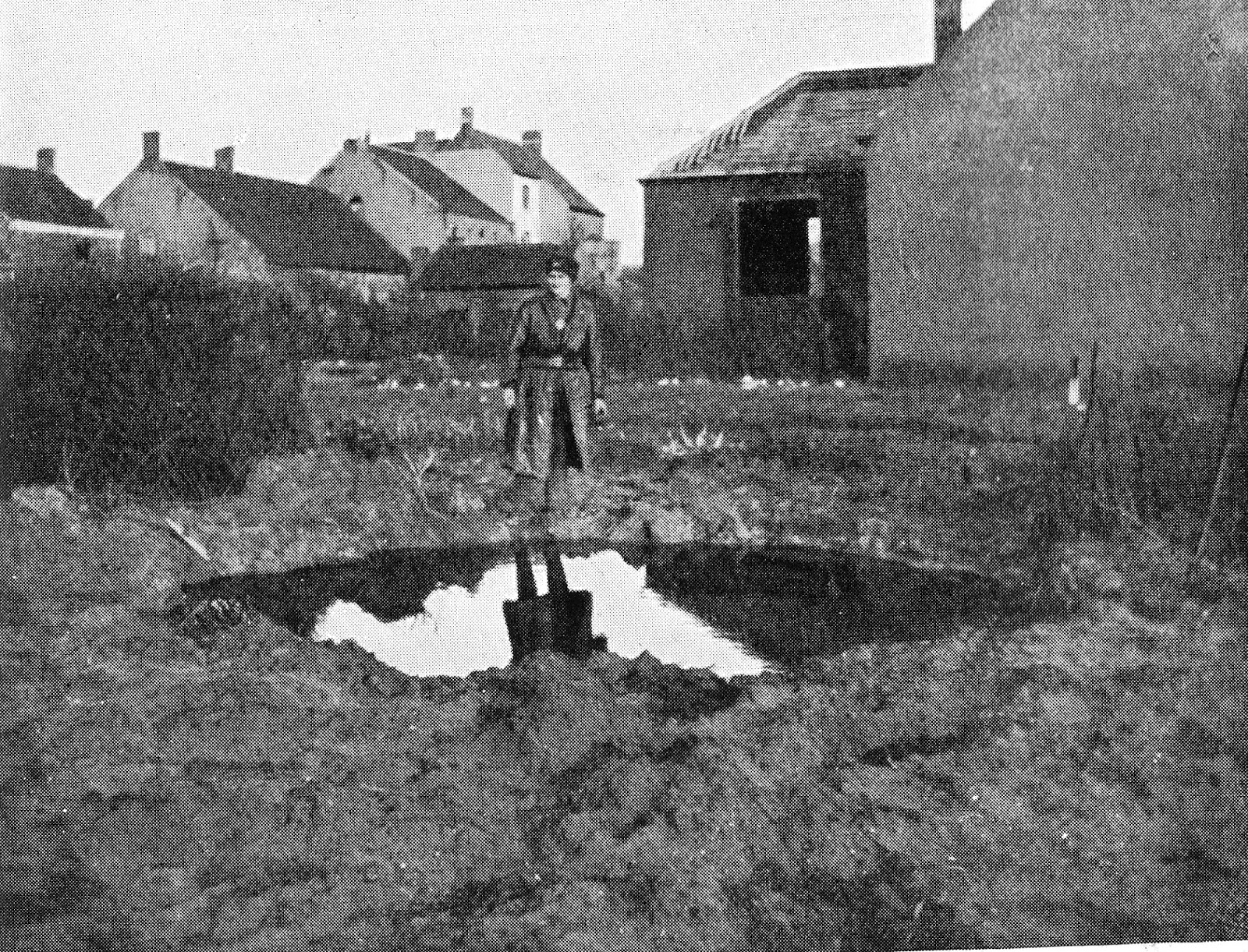
Elsie Knocker and Mairi Chisholm were two motorcycle enthusiasts who, when the war began, became dispatch riders in London with the Women's Emergency Corps. After a month they were asked to join a medical unit called 'The Flying Ambulance Corps" that was headed for Belgium.
Mairi in a shell hole.
The women often came under direct fire.
While in Belgium transporting men from the battlefield to the nearest hospital -- usually miles away -- the women discovered that too many moderately wounded men were dying of shock during the trip. What these men needed immediately, the women realized, was a quiet place where they could recuperate and gather some strength before taking the arduous ambulance ride to the hospital on the muddy, slippery, shell-pocked cobblestone streets.
At the end of November, 1914, after a quick fundraising
trip to Britain

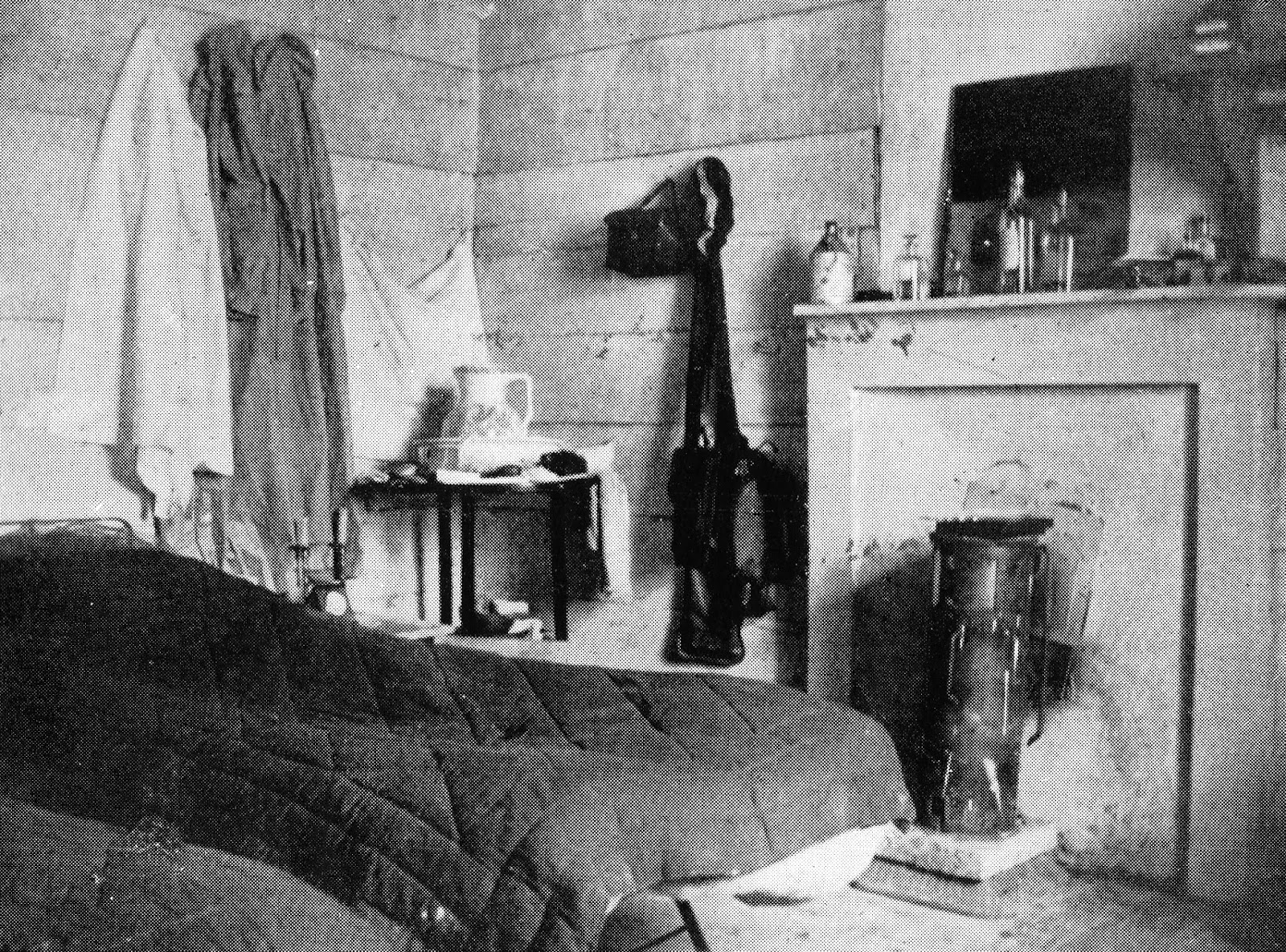
One of the cellar houses before the women converted it
The same cellar house afterwards
They also wrote home often, requesting their relatives to send them
warm men's clothing. The Belgian soldiers nearby often suffered from relatively minor
ailments -- bronchitis, frozen, inflamed feet -- caused by exposure to the cold. Elsie and Mairi let these sick men recuperate in the cellar
house if no one else needed it more. The Belgian soldiers were extremely grateful for all the
sacrifices these two British women were making on their behalf.
But if the Belgian soldiers admired the two brave women, the
feeling was very mutual. Elsie
commended them in the following way in a letter home, requesting supplies: "I have lived amongst the soldiers so long, and know how
plucky and cheerful they are. I see them patched up, returning to their
regiments unmurmuring. I wonder if even our British Tommy would fight so
cheerfully as he does if he were established on twenty miles of Kent


Elsie & Mairi
Photo via the Imperial War Museum
The whole British Army objects to our being
here.
--Mairi Chisholm
--Mairi Chisholm
There isn't a man in the Corps who does his work
better or with more courage and endurance than this 18-year-old-child.
--May Sinclair, British journalist, speaking of Mairi
Chisholm
Read about recent efforts to build a memorial to Elsie & Mairi here.
The Amazon UK link to a recent biography on the women, Elsie and Mairi Go to War.
The Amazon UK link to a recent biography on the women, Elsie and Mairi Go to War.
Friday, August 22, 2014
Four Female Spies/Resistance workers of World War I
Part of France and most of Belgium was occupied by Germany during World War I. This situation gave rise to resistance efforts by affected Belgian and French citizens, some of whom worked for British Intelligence. Their courage foreshadowed -- and in many cases, directly inspired -- the more well known resistance activities that occurred in the same nations during the Second World War.


Marthe Cnockaert
Marthe Cnockaert was a young Belgian woman who worked for British Intelligence during the war.She volunteered at a local army hospital by day, earning a German Iron Cross for her efforts, and waited on German servicemen in her father's café by night, all the while keeping her eyes and ears open for information which she passed along to her Belgian contacts. Eventually caught and tried, her death sentence was commuted to life in prison because of her Iron Cross.
Read more about Cnockaert here.
Gabrielle Petit was a deeply troubled young Belgian who found a new, passionately patriotic lease on life when the Germans overran her country and she began to work for British Intelligence. After she was betrayed to the Germans, her feisty personality and combative behavior during her trial, imprisonment, and execution became immensely galvanizing for Belgian resisters of both world wars.
Read more about Petit here.
Edith Cavell
Edith Cavell was a British nurse and nursing instructor who hid British soldiers in her Brussels clinic and helped them escape from occupied Belgium into the neutral Netherlands. She was caught and her subsequent execution by the Germans caused international outrage and a large but temporary surge in British enlistment numbers.
Her work directly inspired that of World War II resister, Andree de Jongh, founder of the Comet Line.
Louise de Bettignies in 1905
Frenchwoman Louise de Bettignies created and operated a large espionage network in the occupied portion of France. Through her brilliant, courageous, and tireless efforts, British Intelligence was provided with invaluable information during the war. One member of British Intelligence had this to say about her work after the war: "Through [Louise de Bettignies] we learned with a precision, a regularity, and rapidity that was never surpassed by any other organization, all the movements of the enemy, the exact position of their batteries, and a thousand details that were of great help to our headquarters. Possibly, during the course of the war, experience having perfected the method of working one or two services equaled hers. Not one has ever surpassed it."
Her work directly inspired that of famed WWII SOE agent Pearl Witherington.
Read more about De Bettignies here. And fans of historical fiction can read about her in Kate Quinn's fabulous novel The Alice Network.
Keep reading:
Four Female Soldiers of WWI
The nations involved in World War I mobilized their men by equating military service with patriotism. Many women took this idea to heart in a way their governments had never intended: instead of engaging in socially acceptable women's work, they found their way into the ranks of fighting men.
The following female warriors gained significant renown during the Great War.


The following female warriors gained significant renown during the Great War.
Milunka Savic
A veteran of both Balkan Wars (1912 & 1913) as well as World War I, this Serbian warrior is widely considered to be the most highly decorated female in military history. When wounded and her gender initially discovered, it was suggested that she instead work in a nursing station. She refused and requested to be allowed to remain in the ranks of men where she had already proven herself to be a courageous warrior with excellent instincts. Her commanding officer said he'd give her his decision on the following day. She reportedly responded with the following words: "I will wait." She was allowed to remain a soldier.
Read more about Savic here.
Ecaterina Teodoroiu
Ecaterina Teodoroiu was a young woman who joined the Romanian army in an unofficial capacity to be near her brother. After he was killed, she was allowed to become an official member of the army, eventually gaining the rank of lieutenant. When she was killed during the battle of Mărăşeşti she was widely mourned by the entire Romanian army; they had come to admire the passionate patriotism that had driven Teodoroiu to achieve what no other Romanian woman had. After the war she was reburied in a state funeral and multiple monuments were built in her honor.
Read more about Teodoroiu here.
Flora Sandes
Flora Sandes was a British woman who in 1914 accompanied an Anglo-American team of doctors, nurses, and medical volunteers to Serbia. One thing led to another and Sandes became a valued member of the Serbian army, eventually earning the rank of captain. After being wounded by a Bulgarian grenade, Sandes made a recuperation/fundraising trip to England where she gave speeches in her uniform, becoming an enormous inspiration to British women who, at the time, didn't even have the right to vote.
Read more about Sandes here.
Maria Bochkareva
Maria Bochkareva was a Russian peasant who was on the point of suicide during the summer of 1914. The war gave her a new lease on life and she obtained official permission from the Tsar to join the Russian Imperial Army. Highly decorated for bravery and wounded in action several times, Bochkareva became disgusted with the democratic principles that were integrated into the army following the February Revolution. The Provisional Government, attempting to motivate the Russian army into one more successful offensive, asked Bochkareva to organize a shock battalion of women who would fight to the death. While the resulting Women's Battalion of Death proved itself in battle, it didn't achieve its original goal of motivating the Russian army. It did, however, galvanize suffragists all over the world.
Friday, June 20, 2014
Olive King, her ambulance, and a fire in Salonika

Olive King and her ambulance
Australian War Memorial
P0 1352.002
"On the afternoon of August 18, 1917, a fire broke out in Salonika, which was now swarming with soldiers from Serbia, France, Britain, and Italy, as well as colonial troops from India, Indochina, and North Africa. Olive, seeing the fire from a distance and longing to have a closer look, was thrilled when she was ordered to assist. Driving into the city she found it a place of utter confusion as panic-stricken people fled with whatever goods they could rescue from the terrifying roar of the flames.
Olive, at times only yards away from the fire, worked all night rescuing people and their possessions. Moments after one Serbian family climbed into her ambulance, their house caved in with a deafening crash. Olive kept saying to herself that it was all 'too dreadful...too frightening to be really happening.'"
Excerpt from "Olive King: Adventurous Ambulance Driver" from Women Heroes of World War I.
Subscribe to:
Posts (Atom)